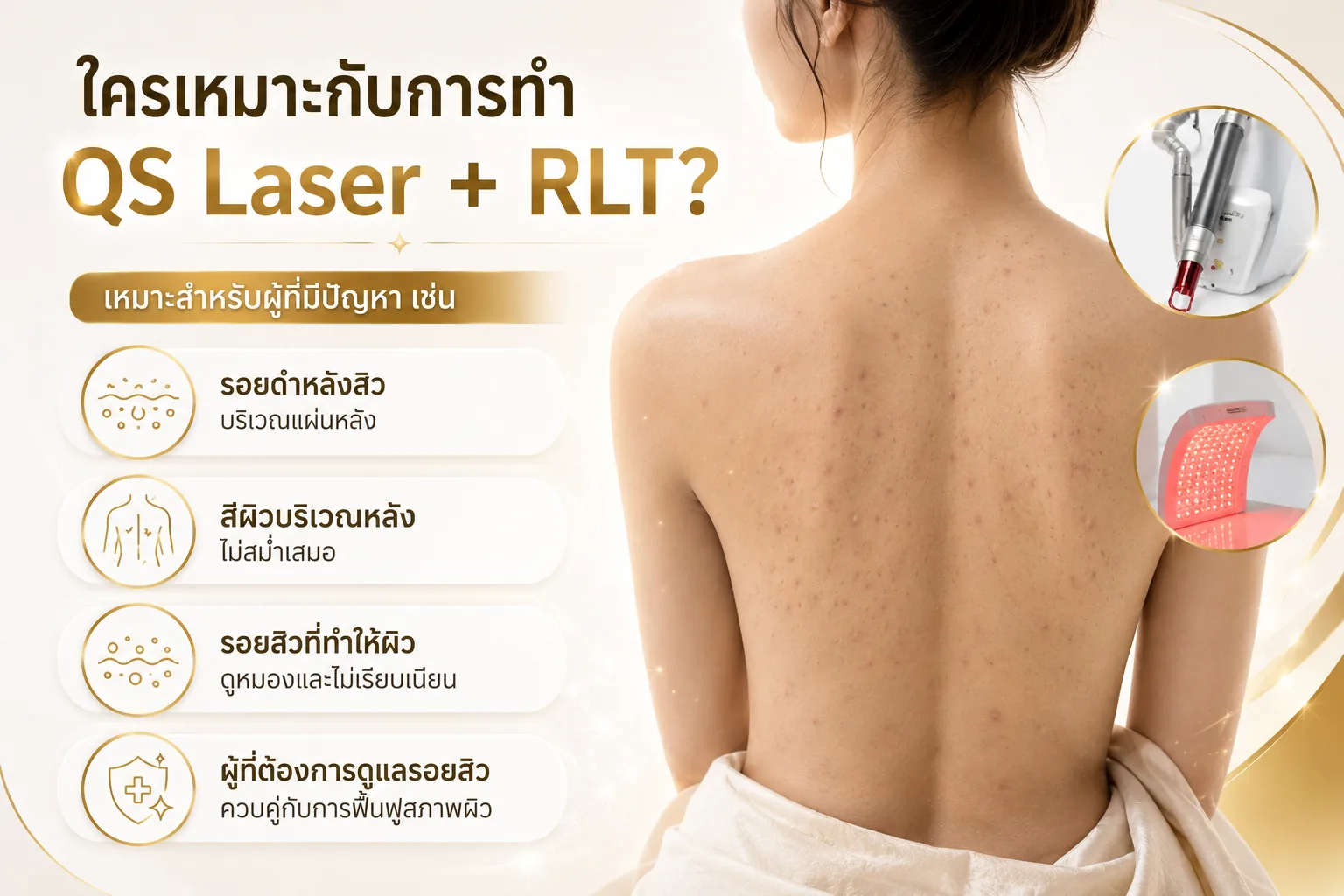
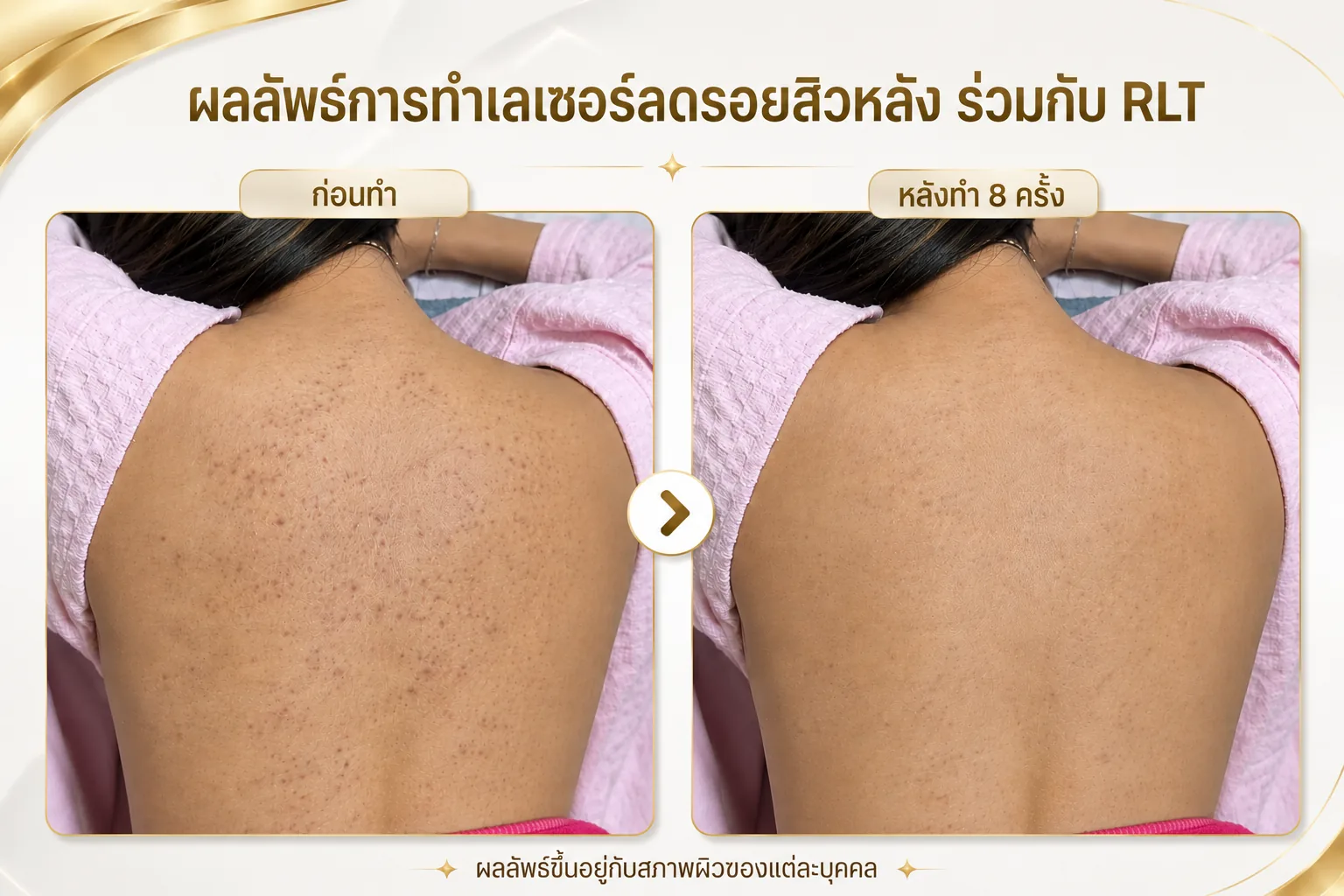
Acne marks on the back are a common skin problem — whether red marks, dark marks, or
uneven skin tone, which can sometimes persist for a long time even after the acne has cleared, making many people feel less confident when wearing backless tops or clothing that exposes the back.
One approach that helps address back acne marks is using the QS Laser
to help manage the pigment accumulated in the skin, combined with RLT (Red Light Therapy) to help care for the skin after the treatment.
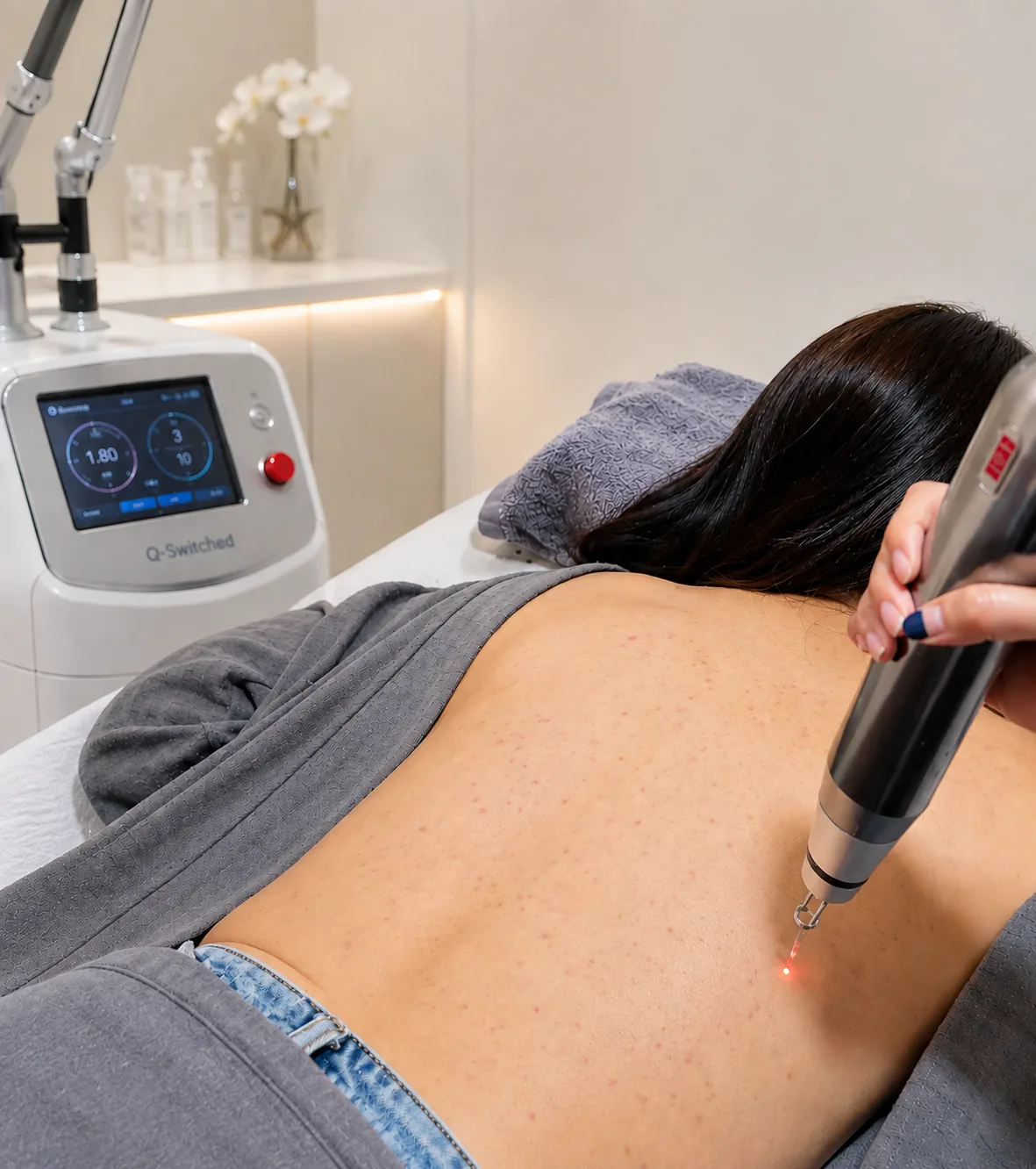
How Does the QS Laser Help with Back Acne Marks?
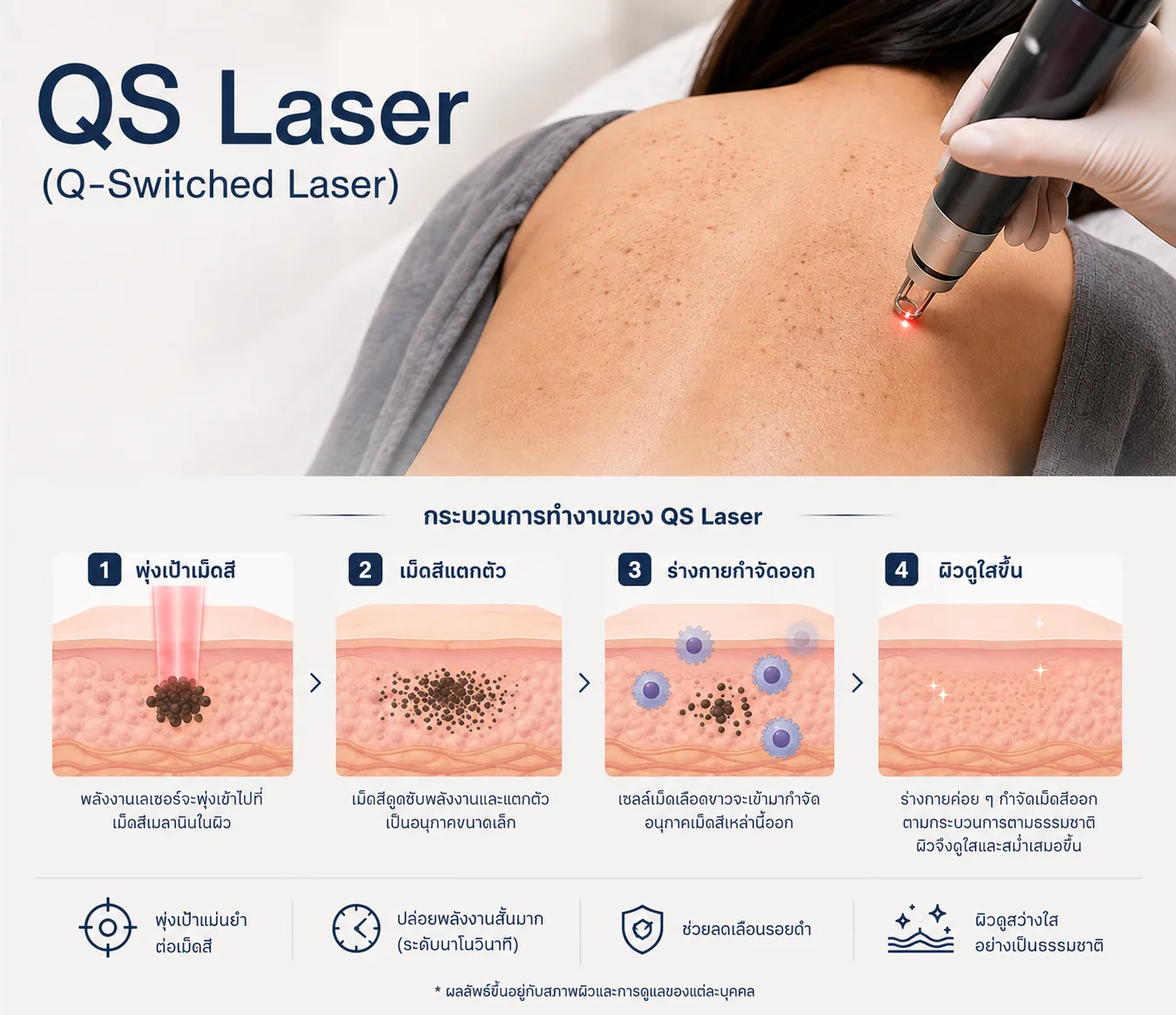
The QS Laser, or Q-Switched Laser, is a laser that emits energy in an extremely short pulse,
targeting the pigment in the skin, helping the pigment break into tiny particles that the body gradually eliminates through its natural process.
It can therefore be used as part of caring for post-acne dark marks (post-inflammatory hyperpigmentation) and uneven skin tone.
Laser treatment on the back should always begin with assessing the skin condition and the type of marks, because acne marks
of each type respond to treatment differently, and the energy settings must be appropriate for each individual’s skin tone.
So What Does RLT Help With?
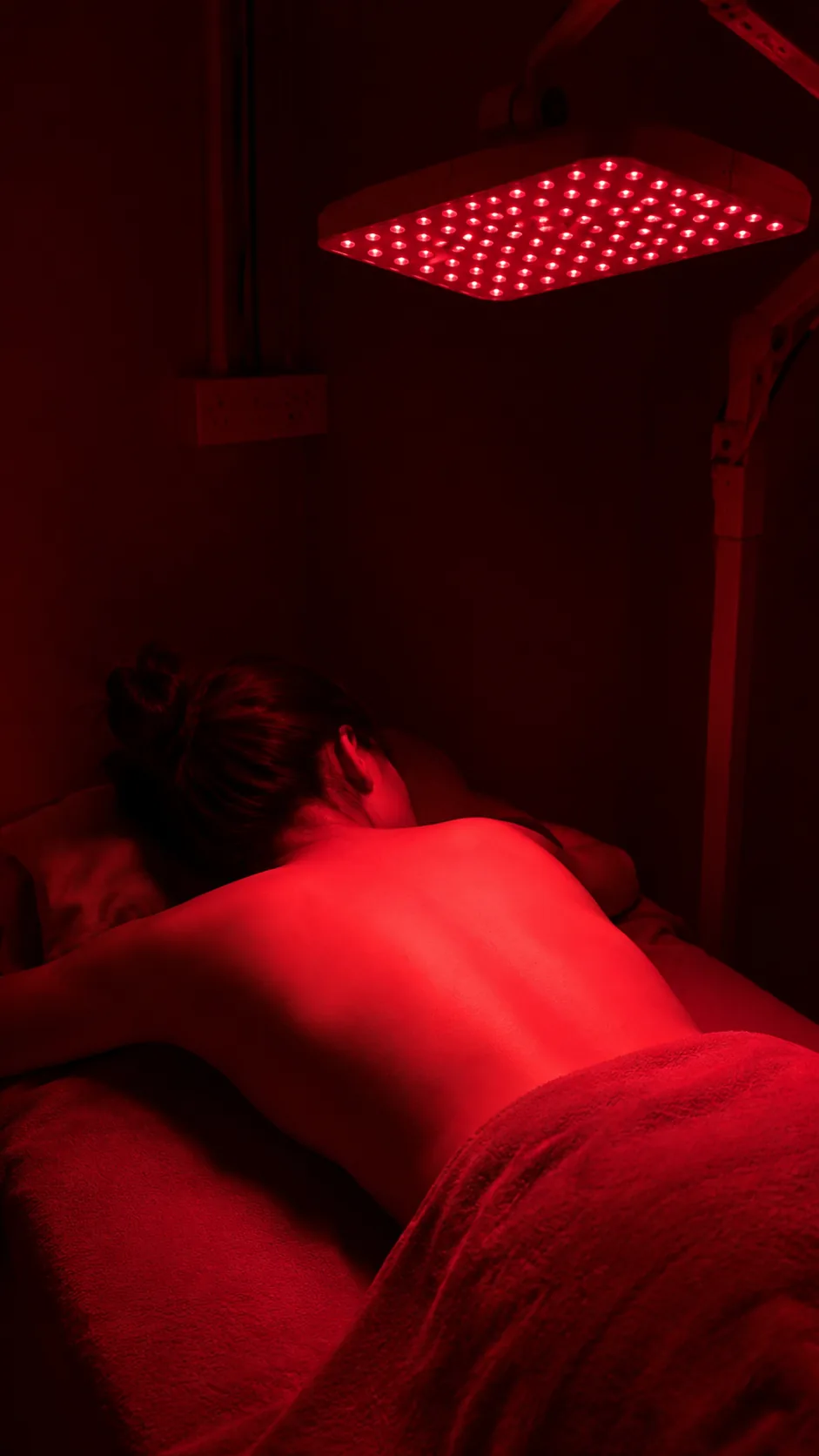
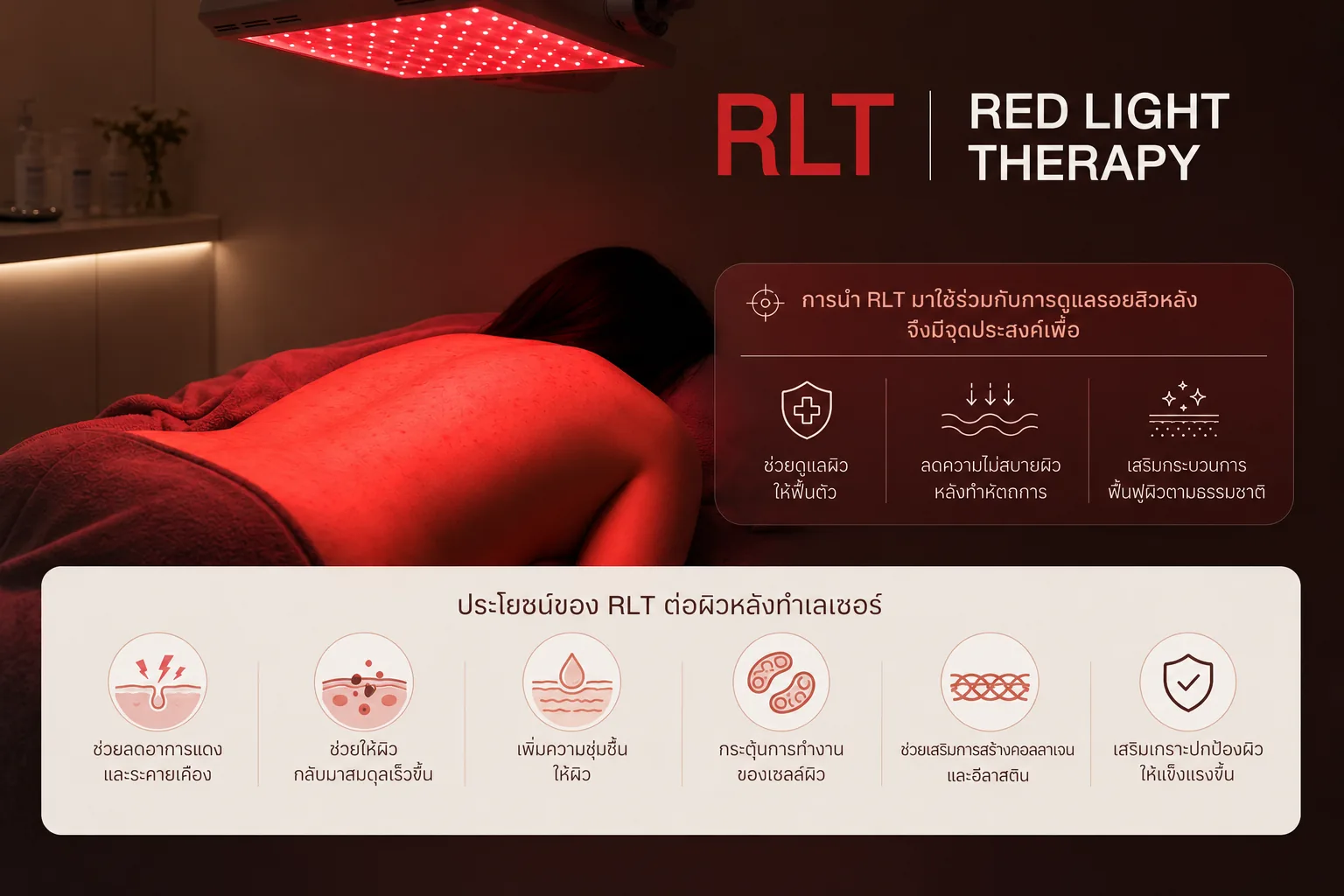
After laser treatment, there may be slight skin redness or irritation. RLT, or
Red Light Therapy, is another method used to help care for the skin after treatment, in which red light passes into the skin to a certain depth, and its effects on the biological processes of skin cells have been studied.
Using RLT together with back acne-mark care therefore aims to help the skin recover and reduce skin discomfort after the procedure. However, results depend on each individual’s skin condition and treatment program.
Why Choose the QS Laser Together with RLT?
A combined treatment is designed to care for the skin in more than one aspect.
The QS Laser focuses on managing pigment and dark marks, while RLT focuses on caring for the skin
after treatment and supporting the skin’s recovery process.
So a program can be designed to suit those with back acne marks, uneven skin tone,
and skin that needs recovery after laser treatment.
Steps for Caring for Back Acne Marks
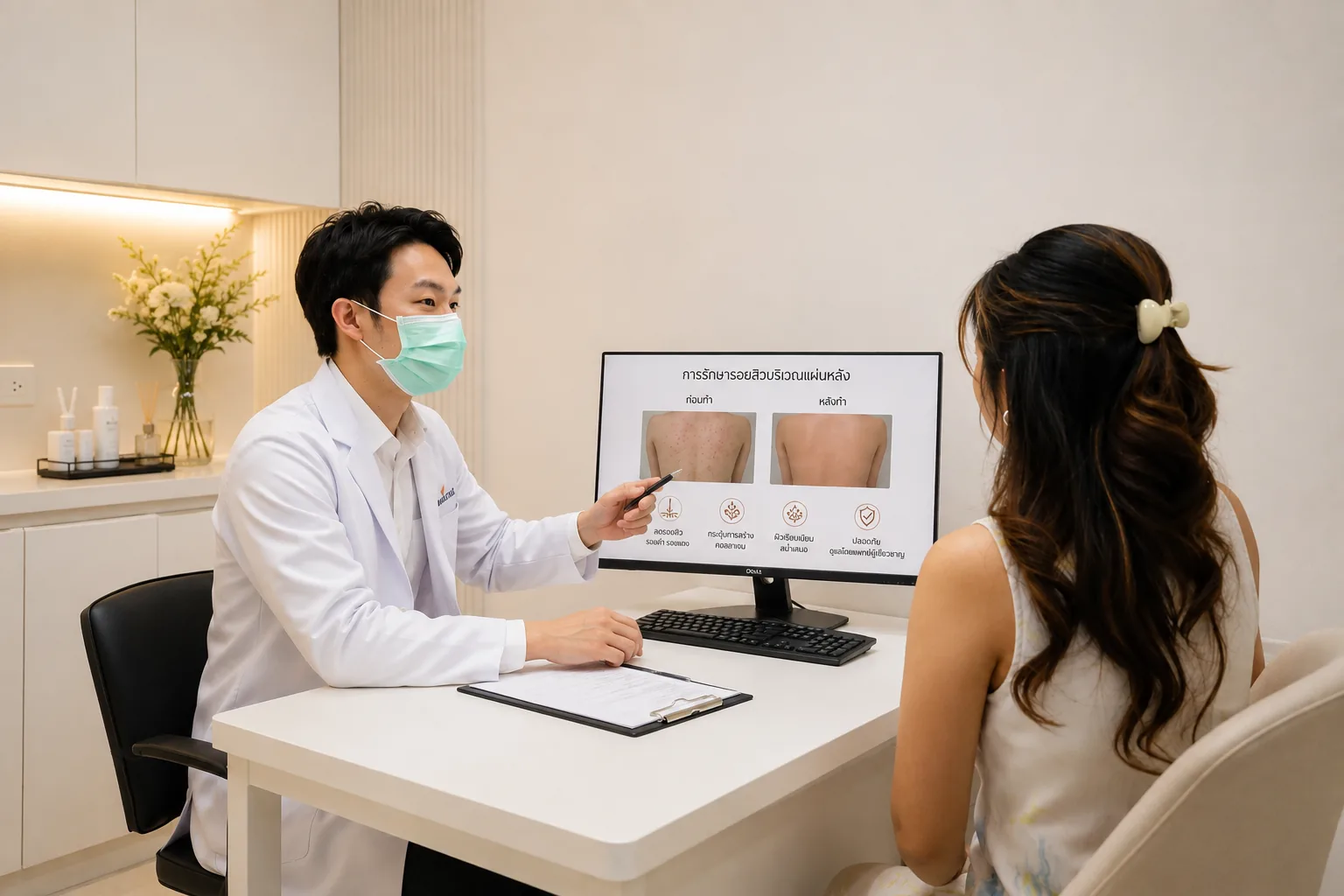
In general, the doctor first assesses the skin condition and the characteristics of the marks, then cleanses the back area and selects the QS Laser parameters appropriate for the skin condition.
After the laser, RLT light is applied according to the program set by the doctor or provider, to help care for the skin after the treatment.
After treatment, the skin should be cared for gently, avoiding scratching, scrubbing, or using products that may cause irritation, and the treated area should be properly protected from sunlight.
How Many Sessions Before Results Show?
The appropriate number of sessions is not fixed, as it depends on the intensity of the dark marks, the number of marks, skin tone, the response to treatment, as well as whether new acne keeps appearing.
In general, caring for acne marks usually requires continuous treatment and giving the skin time to adjust, so results should be assessed periodically by a specialist.
If acne still frequently appears on the back, treating only the dark marks may not be enough, because new acne can leave new marks again. Controlling the acne alongside caring for the marks is therefore an important part of the treatment.
Who Is QS Laser + RLT Suitable For?
Suitable for those with problems such as:
- Post-acne dark marks on the back
- Uneven skin tone on the back
- Acne marks that make the skin look dull and uneven
- Those who want to care for acne marks alongside restoring their skin
However, not everyone is suitable for the same type of laser, especially those with darker skin, a tendency toward post-inflammatory hyperpigmentation, or wounds/infection in the area to be treated, who should be assessed beforehand.
Caring for Back Acne Marks Precisely
Good treatment of acne marks is not just about fading the marks, but should begin with assessing whether they are red marks, dark marks, or acne scars, and choosing the method suitable for that particular problem.
QS Laser + RLT is therefore another option for caring for back skin that has acne marks, and should be done under assessment and appropriate settings by a specialist, to increase safety and the chance of achieving results suitable for each individual.