
Take for example an interesting hair transplant case. To see treatment planning guidelines for people with severe baldness problems.
The day before planting
Basic patient information
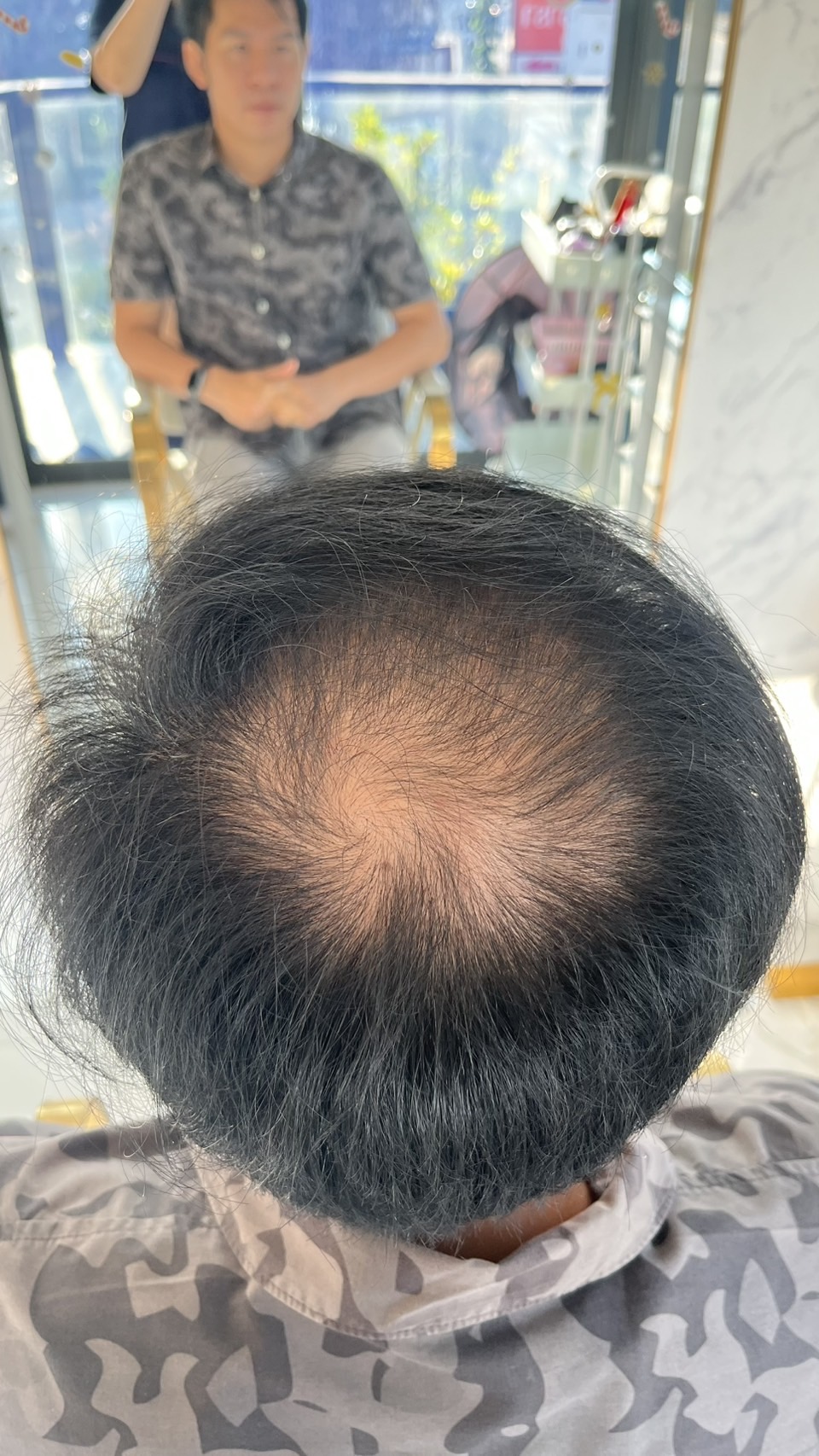
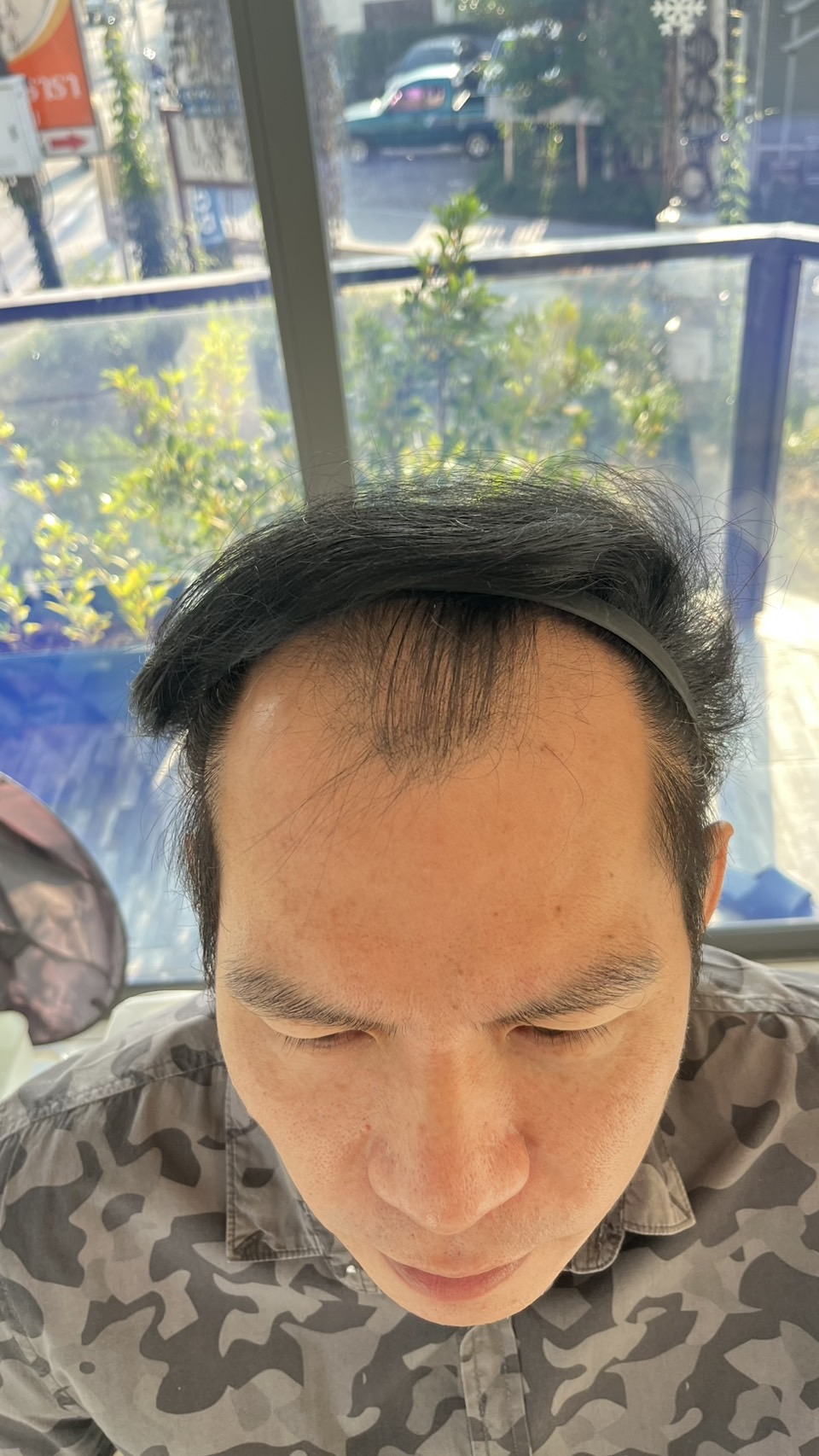
Male patient, Thai nationality, has problems with thinning hair and baldness. The assessment was at level 5 according to the Norwood-Hamilton Scale, which is considered to be quite severe. There is clearly some hair in the area.
- Mf (Mid Frontal) : middle of the front of the head.
- Vx (Vertex) : Khwan area
From the assessment of the entire area If you want to plant densely throughout the area As many as approximately 5,000 grafts may be needed, which is even theoretically achievable. But in practice, the amount of graft that can be harvested from the occipital area (Donor Area) may not be enough. This type of case is therefore classified as an Advanced Hair Transplant case or a highly complex hair transplant case.
The key to treatment is “Creating balance (Balance)” between
- Quantity of grafts that can actually be stored
- Area and location where you want to plant
Evaluation of hair roots before surgery
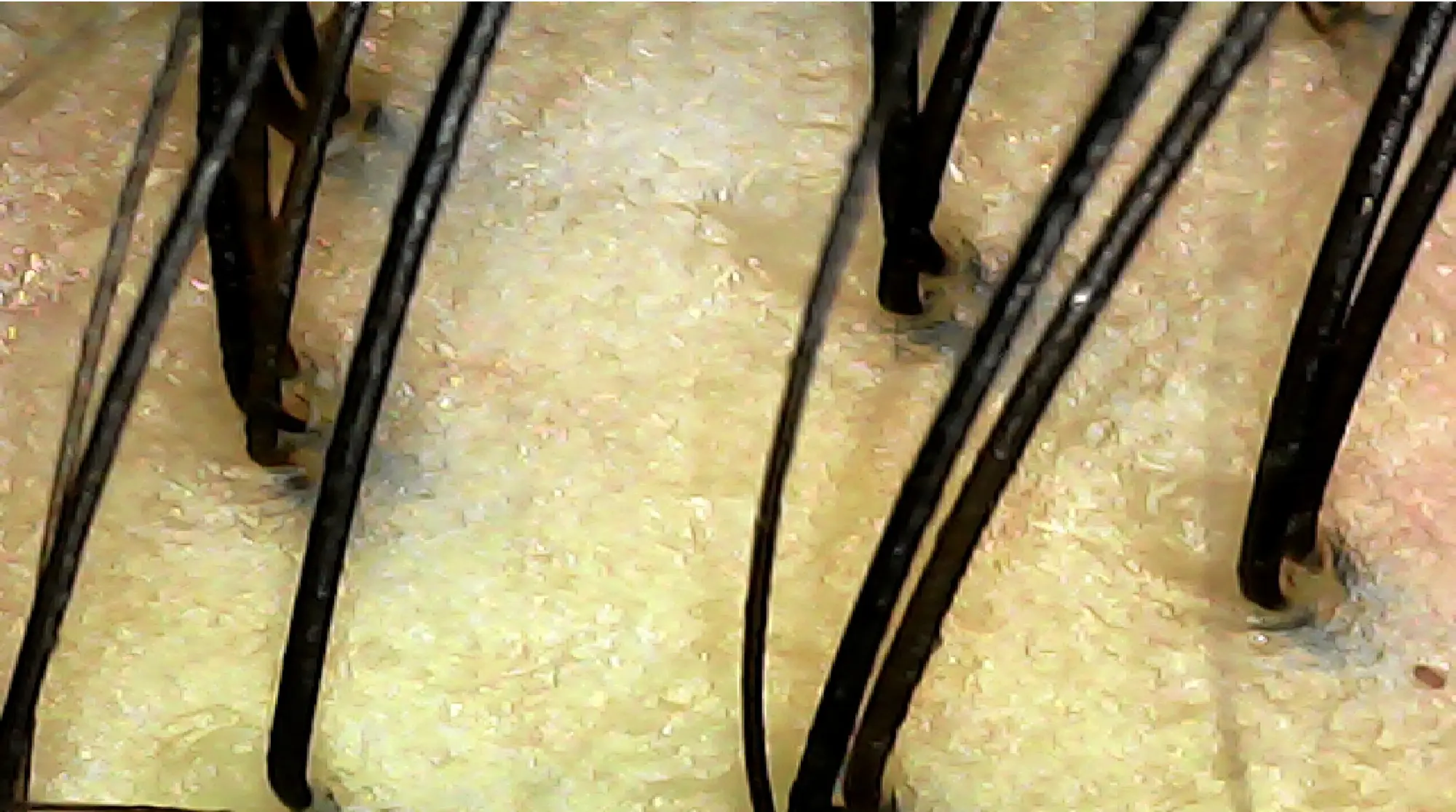
On the day of the hair transplant, the condition of the hair roots in the occipital area was examined using a magnifying glass. It was found that the hair roots were strong. Even if the patient has never used hair growth medicine before.
However, not all patients have such healthy occipital hair follicles. In some cases, the hair is thin or has low density. Minoxidil may be needed to stimulate and nourish the hair follicles before surgery.
Hair transplant planning: prioritizing areas
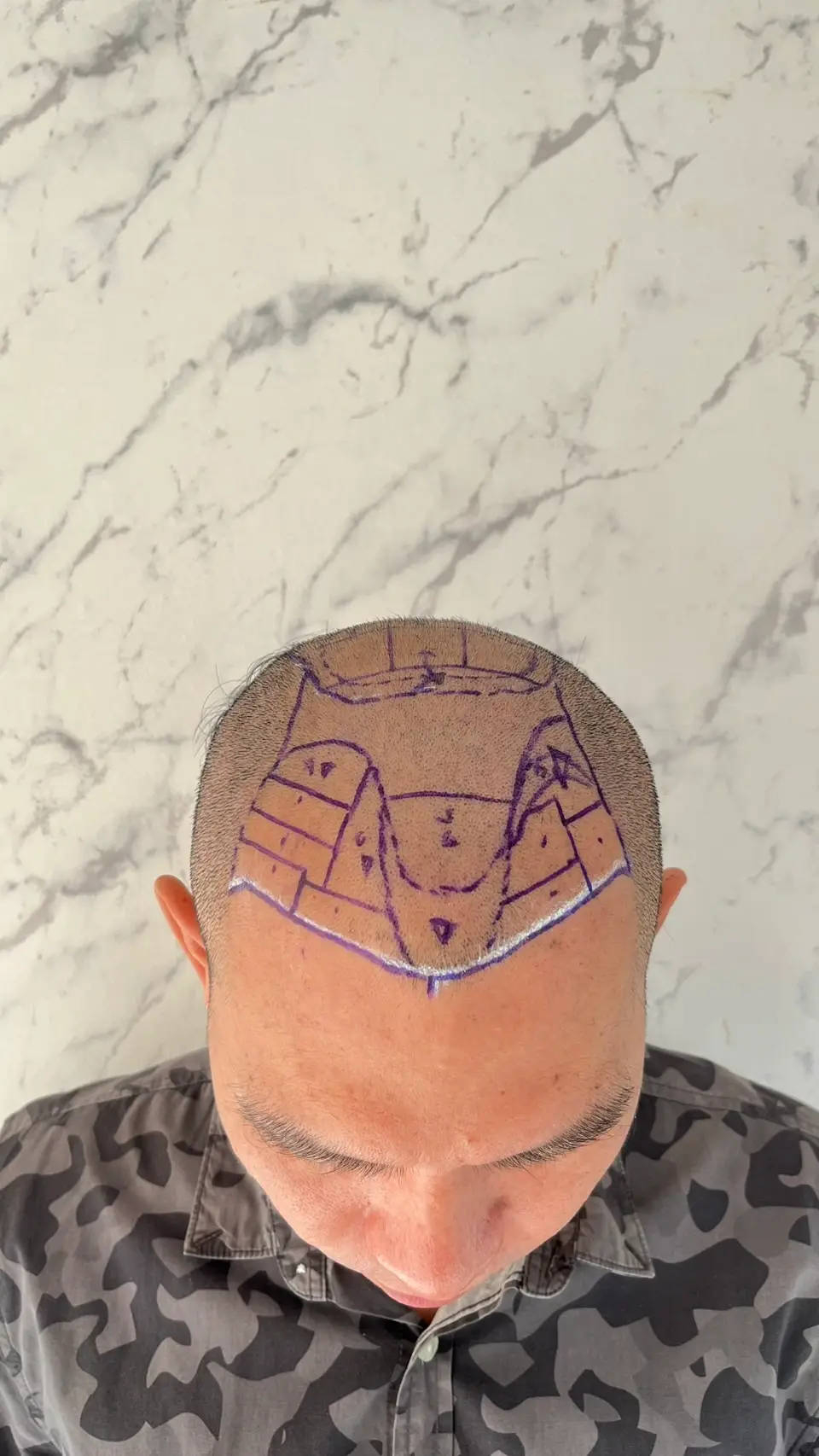
This patient has problems covering 4 main areas:
- Front (Lt / Mf / Rt)
- middle of head
- Kwan (Vx)
1. Front hairline area (Lt / Mf / Rt)
Plant with a density of approximately 50 grafts/sq.cm. to create a sharp facial frame Makes it possible to style your hair with confidence and does not look as thin as before planting
2. Middle area of the head and morale (Mid Mf & Vx)
Planted with a density of approximately 30 grafts/sq.cm. To have evenly covered hair Although not as dense as the front But it still looks natural. In this area, the patient still has the original hair roots remaining. It’s just thinner from genetics. Therefore, use hair growth medicine continuously after surgery. It will help restore and increase the density of the original hair.
Post-transplant care on the 10th day after transplantation

It’s a time to take off scales. Before entering the hair transplant phase, Shock Loss may occur, which is a normal process.
In this phase, the clinic will
- Prepare hair growth medicine for continuous use
- Schedule PRP (Platelet-Rich Plasma) injections periodically to stimulate hair follicle recovery.
Results after 1 year


At the end of 1 year after the hair transplant, it was found that
- The facial frame is clearly sharper.
- Can style hair easily
- The middle area of the head is dense. Even if planted at a density that is not very high
Part of the good results from regular use of medicine Especially DHT Blocker drugs, which play an important role in maintaining both transplanted and existing hair
Conclusion
People with severe baldness, such as levels 5–6–7 according to the Norwood-Hamilton Scale, can still receive treatment and grow hair.
However, this type of case requires
- detailed planning
- Understanding the limitations of graft volume
- Cooperation in post-planting care and continued use of medicines
When doctors and patients work together properly It can create natural results. and increase patient confidence with maximum efficiency