MP Clinic
Q-Switch + RLT
Reduces acne marks, dark marks and red marks on the back
Q-Switch Laser • Red Light Therapy
60–90 MIN
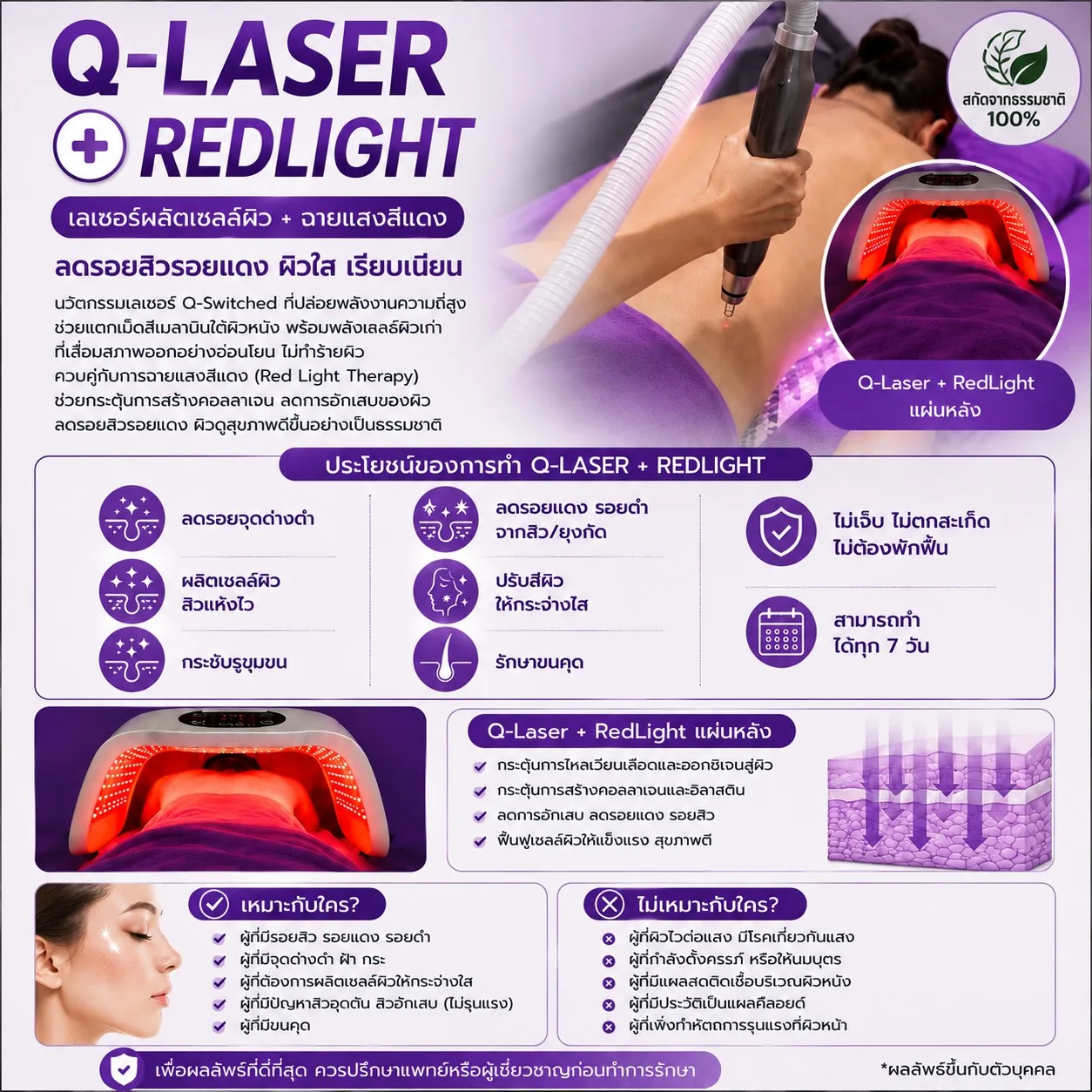
Q-Switch Laser for Back Acne Marks, Dark Marks and Red Marks, Combined with RLT Light Therapy
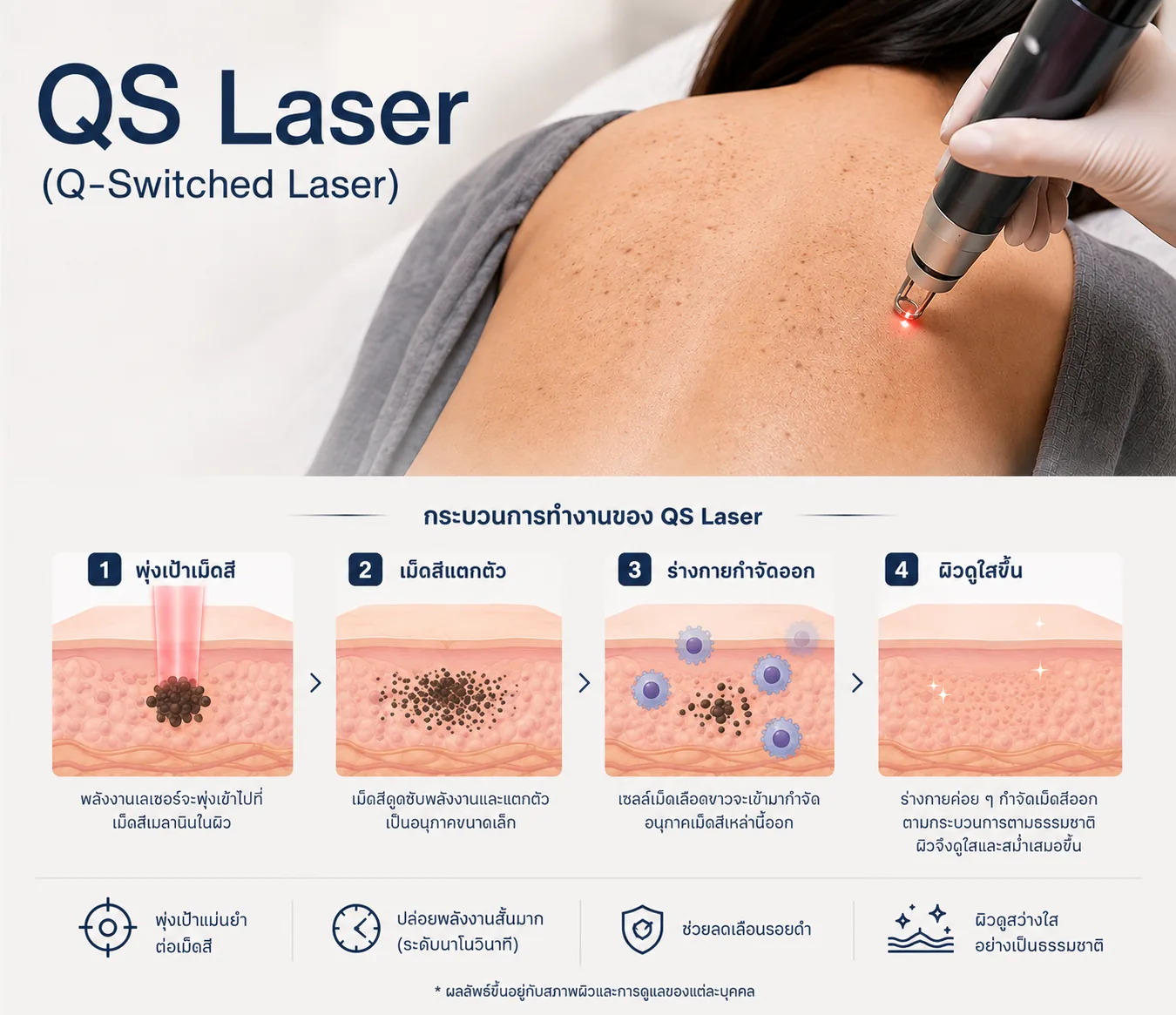
Back acne is a common problem, whether it is clogged pores, inflamed acne, or acne that leaves dark and red marks behind after it heals. These marks can make the skin on your back look uneven and discoloured, and make many people feel less confident wearing backless clothing or swimwear.
Today, Q-Switch laser technology is used to help fade certain types of dark marks, together with RLT (Red Light Therapy), which uses red light to support the response and recovery of skin cells.
Combining both methods is therefore another interesting approach to back skin care, with the type of acne marks, skin condition and individual suitability considered before treatment.
How Do Q-Switch and RLT Work Together?
Q-Switch Laser: Focused on Fading Dark Marks
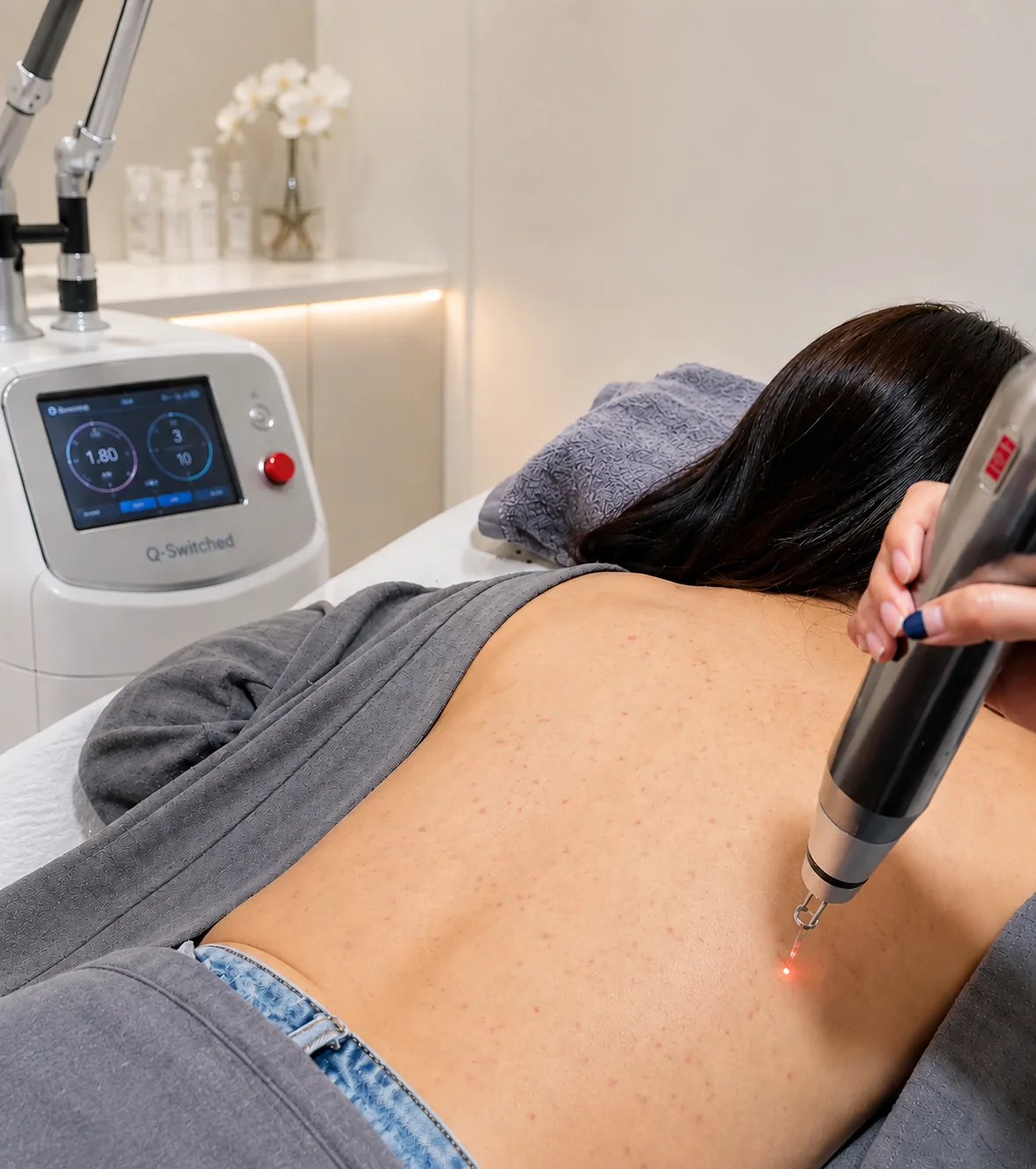
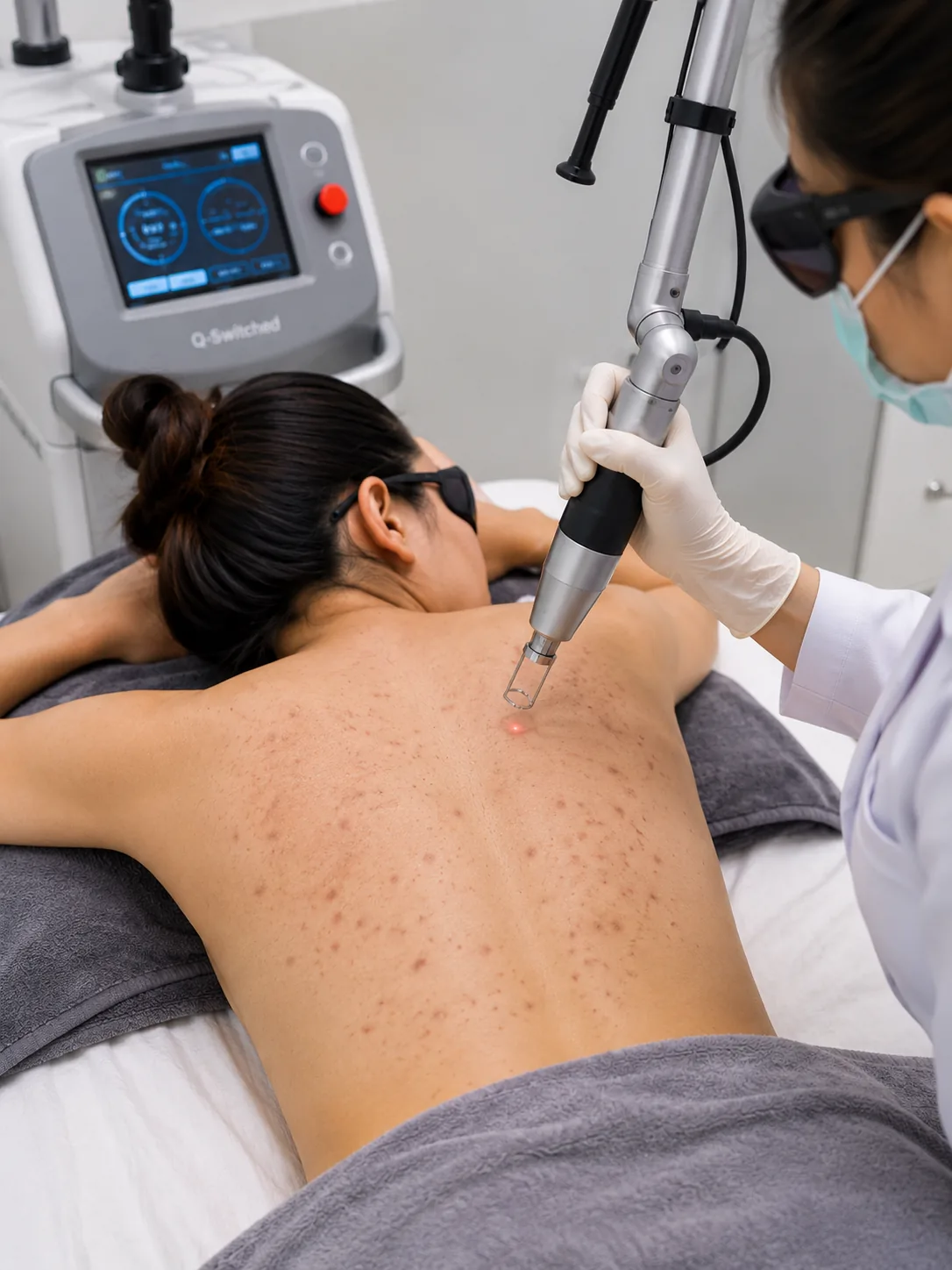
The Q-Switch laser releases energy in extremely short pulses to deliver energy to target pigment in the skin, breaking the pigment into smaller particles that the body gradually clears through its natural processes.
On the back, Q-Switch may help fade certain types of acne dark marks and make skin tone look more even. Results depend on the type and depth of the pigment, as well as the wavelength and energy used.
RLT (Red Light Therapy): Supporting Skin Recovery
RLT uses red light at suitable wavelengths to stimulate cellular responses through Photobiomodulation, which may affect cell function and mechanisms related to inflammation and tissue recovery.
Red light has been studied for its role in skin care and relieving certain types of inflammation, but results depend on the device, light dose and indication, so RLT should not be considered able to treat acne or clear every type of red mark.
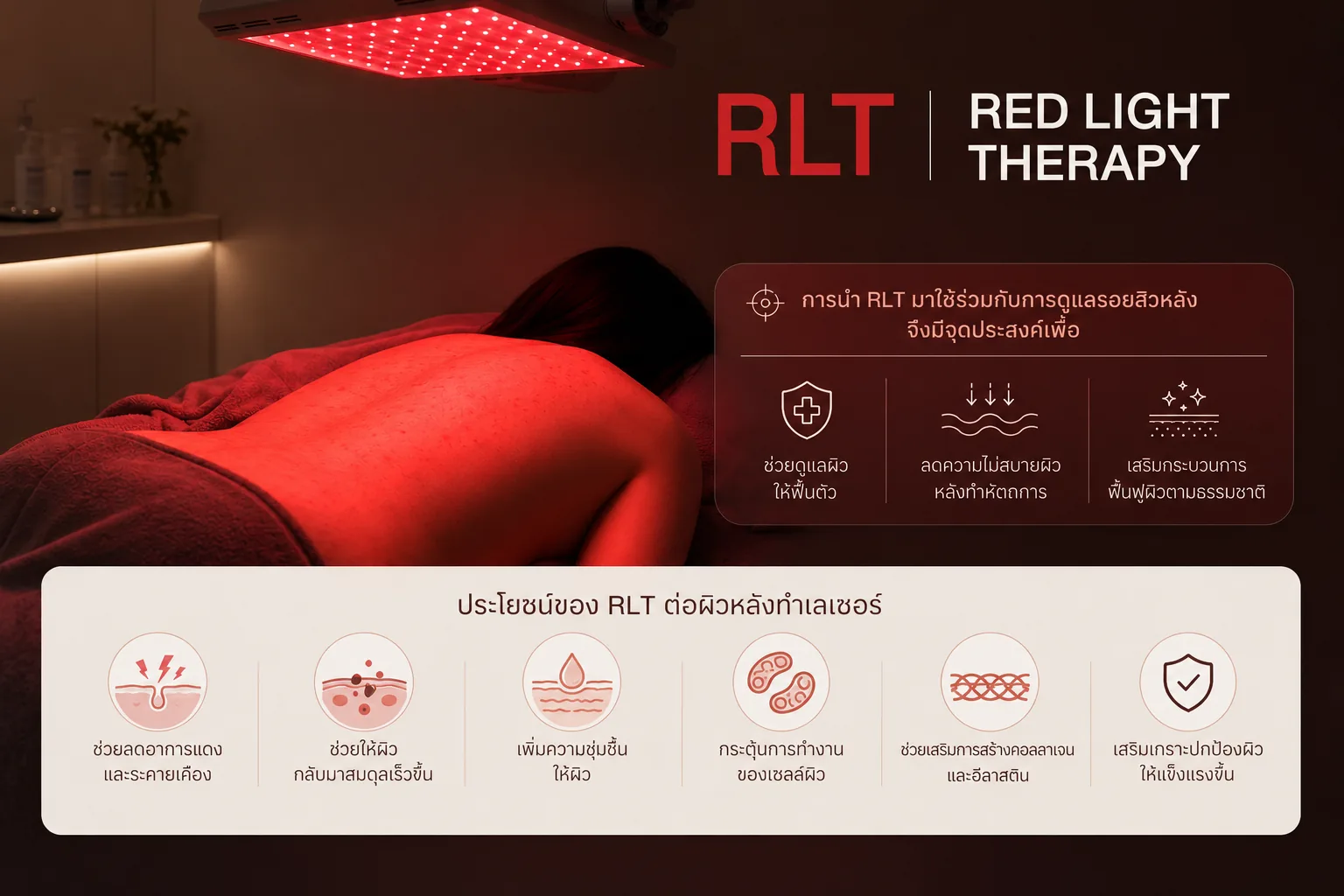
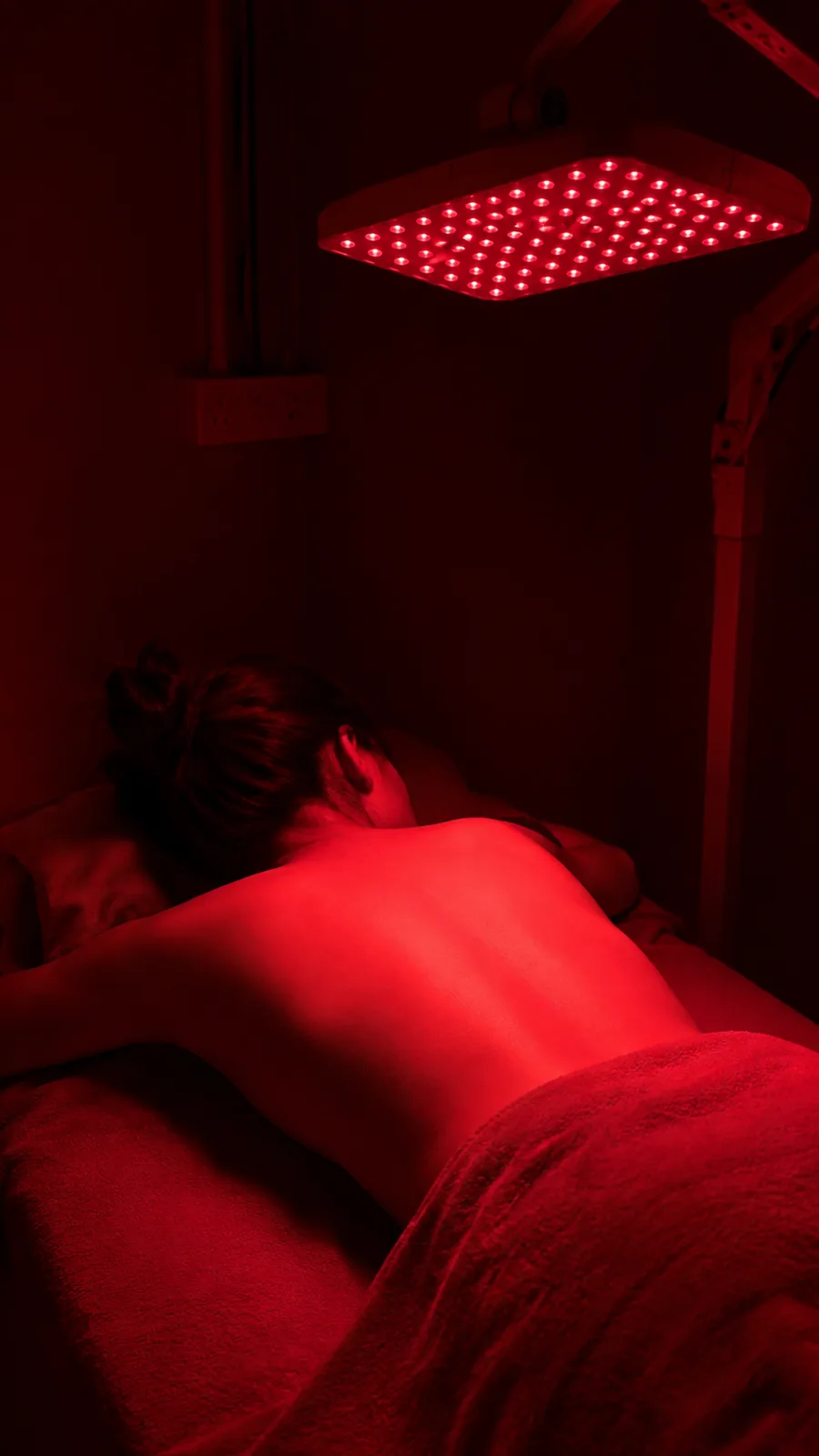
Following Q-Switch with RLT
The idea of combining them is for the Q-Switch laser to target the pigment that causes dark marks, while RLT may help support the skin cells’ response within a suitable skin care program.
Following Q-Switch with RLT may help improve the reduction of acne marks or speed up recovery. The choice should therefore be based on your actual skin condition and the appropriate guidelines for each device.
Benefits of Combining Q-Switch with RLT for the Back
1. Helps fade dark acne marks
Dark acne marks are caused by increased pigment production after inflammation, especially when acne is squeezed, picked or scratched. Q-Switch may help address certain types of pigment, but it must be used appropriately, because unsuitable energy settings can also trigger more dark marks.
2. Helps care for skin with red acne marks
Red acne marks are caused by changes in blood vessels and inflammation, not mainly melanin pigment. Q-Switch is therefore not the best option for every type of red mark, while RLT may help modulate certain inflammatory responses, although specific evidence for red acne marks on the back is still limited.
If red marks are prominent, a specialist should assess whether other treatments are needed as well.
3. Supports skin care after the procedure
RLT may play a role in supporting tissue recovery in some contexts, so it may be considered as an add-on after laser treatment. However, this does not mean it can always prevent irritation or side effects from Q-Switch.
4. Helps make skin tone on the back look more even
As certain types of dark marks gradually fade, the skin on the back may look more even. However, treating acne marks takes time, and the treatment plan may need to be adjusted according to how your skin responds.
5. Part of a comprehensive skin care program
Effective acne mark care should not focus only on reducing existing marks, but also on controlling new breakouts to prevent inflammation and new marks.
What Can It Help With?
| Back skin problem | Role of Q-Switch and RLT |
|---|---|
| Dark acne marks | Q-Switch may help reduce certain types of pigment, while RLT is a supportive treatment whose benefits still need further assessment |
| Red acne marks | RLT may help modulate certain inflammatory responses, but Q-Switch is not the main option for every type of red mark |
| Active inflamed acne | Inflamed acne should be treated first or alongside, according to the doctor’s plan. Q-Switch should not be used as a direct treatment for inflamed acne |
| Uneven skin tone | May improve as target pigment decreases, provided there is no recurring acne or inflammation |
How Often Should I Have Treatment?
Frequency depends on the type of acne marks, pigment intensity, the energy used and how the skin on your back responds.
Initial Planning Guidelines
Q-Switch Laser
For fading dark acne marks, sessions may be scheduled several weeks apart, with the doctor assessing changes in pigment and skin recovery before the next session. Treatment should not be done more often just to fade dark marks faster.
RLT
In some programs RLT may be done more often than the laser, but it must follow the wavelength, light intensity, exposure time and instructions for that device. It does not always need to follow every laser session.
Assessing Results
Results should be followed up regularly, considering dark marks, red marks, new breakouts and side effects. If the skin becomes irritated or dark marks increase, treatment should be slowed down and the plan reassessed.
How long acne marks take to fade varies from person to person. Some may need several weeks to several months, and the treatment approach may need adjusting along the way.
How Can I Care for My Skin for Better Results?
For effective acne mark treatment, you should also care for your skin at home
- Shower and cleanse your skin after sweating, using non-irritating products
- Avoid squeezing, picking or scratching acne, as this can cause more dark marks and scars
- Choose breathable clothing and reduce friction on your back
- Use suitable acne products if you still get new breakouts, and consult a specialist if you have a lot of inflamed acne
- Protect your skin from the sun when your back is exposed, especially while you have dark marks
- Follow the post-laser instructions and avoid irritating products until your skin recovers
If you notice severe pain, severe swelling, blisters or abnormal skin discolouration after treatment, contact your provider for an assessment.
Summary: Targeted Care for Back Acne Marks with the Right Treatment
Q-Switch laser combined with RLT light therapy is an approach that considers pigment management together with supporting the skin cells’ response. Q-Switch may help fade certain types of dark acne marks, while RLT may be an add-on within a suitable skin care program.
However, dark marks, red marks, inflamed acne and scars have different causes. Choosing the technology that matches the problem is therefore more important than combining several methods without a clear indication.
The key to back skin care is treating new breakouts while fading existing marks, preventing irritation and following up continuously, so your skin gradually becomes smoother with a more even tone.
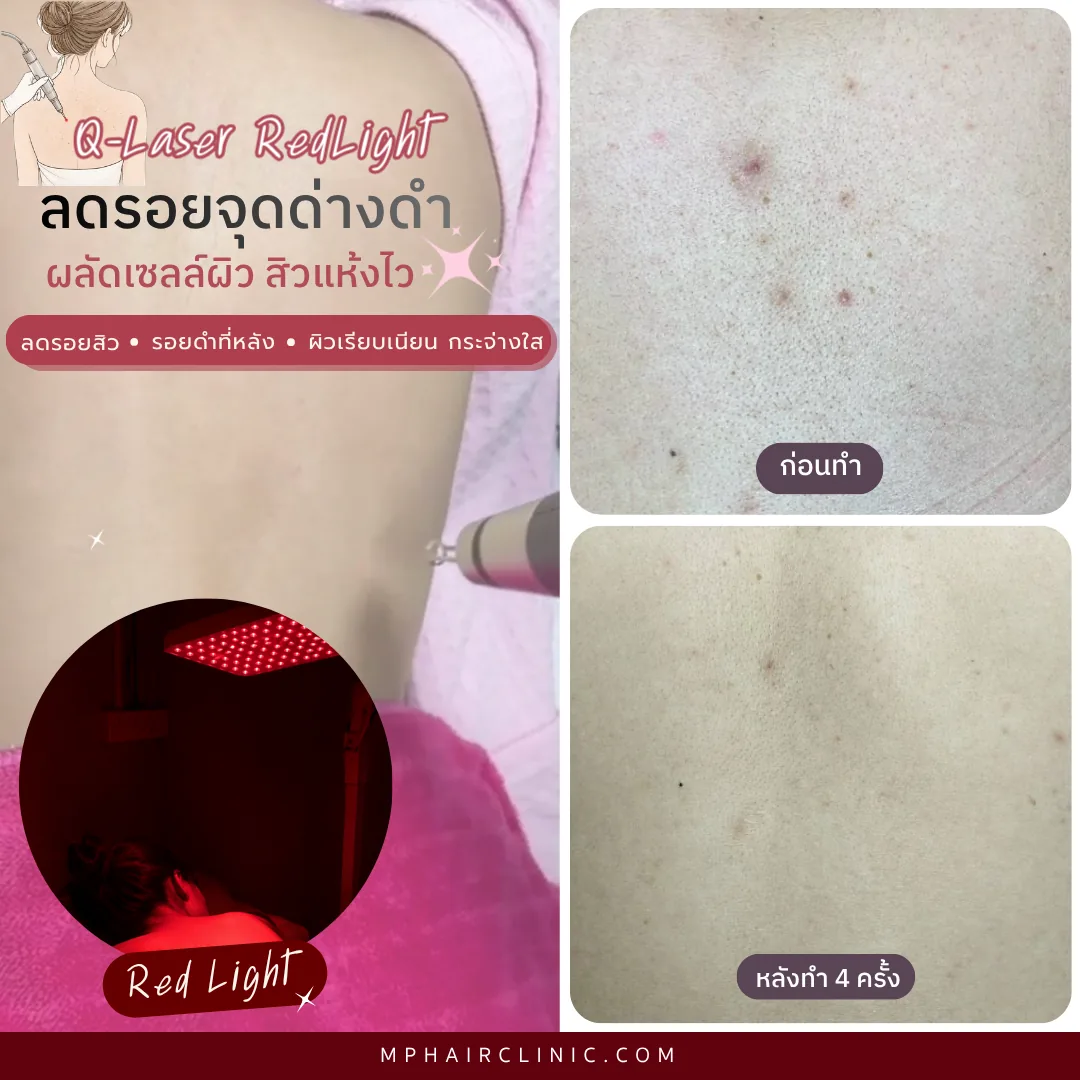
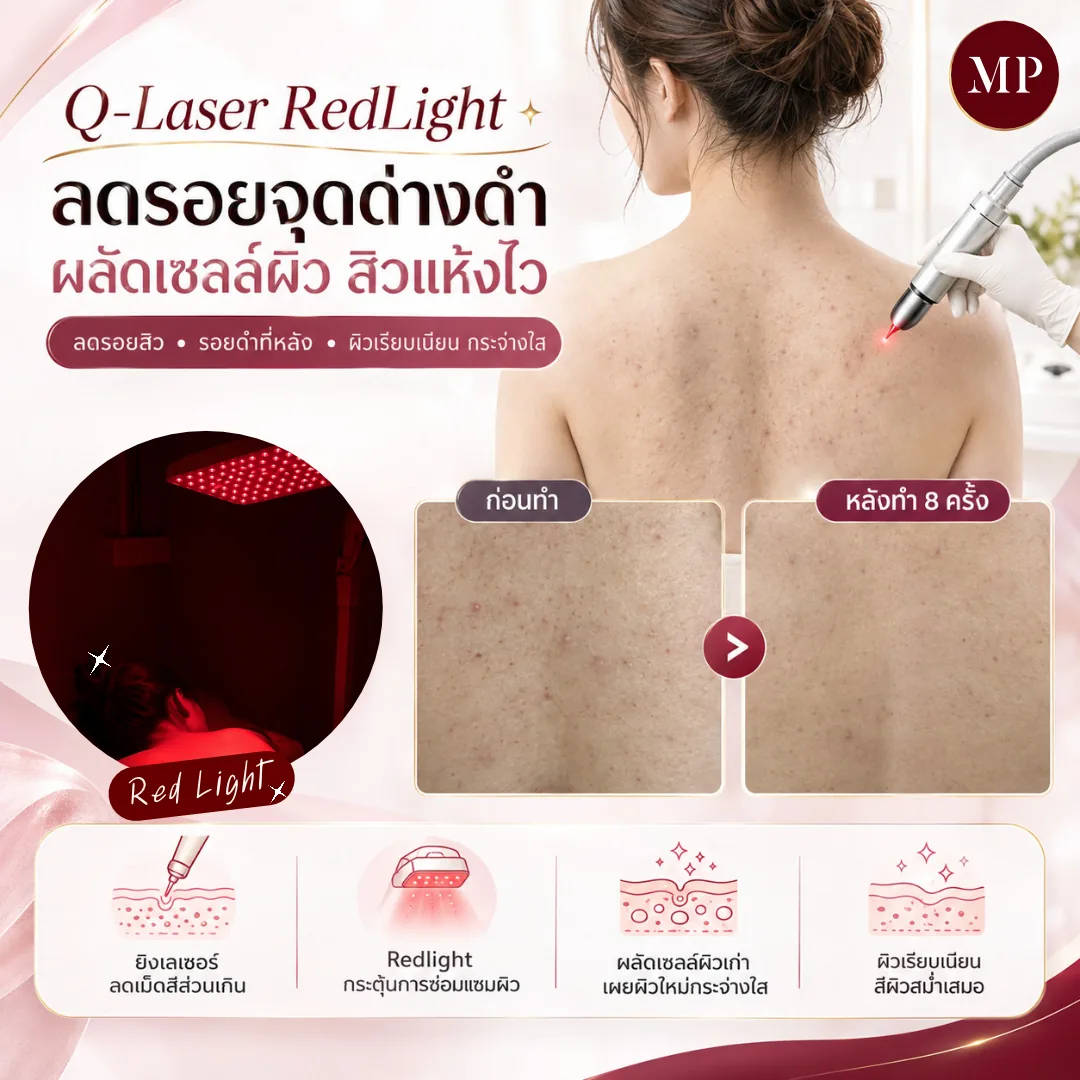
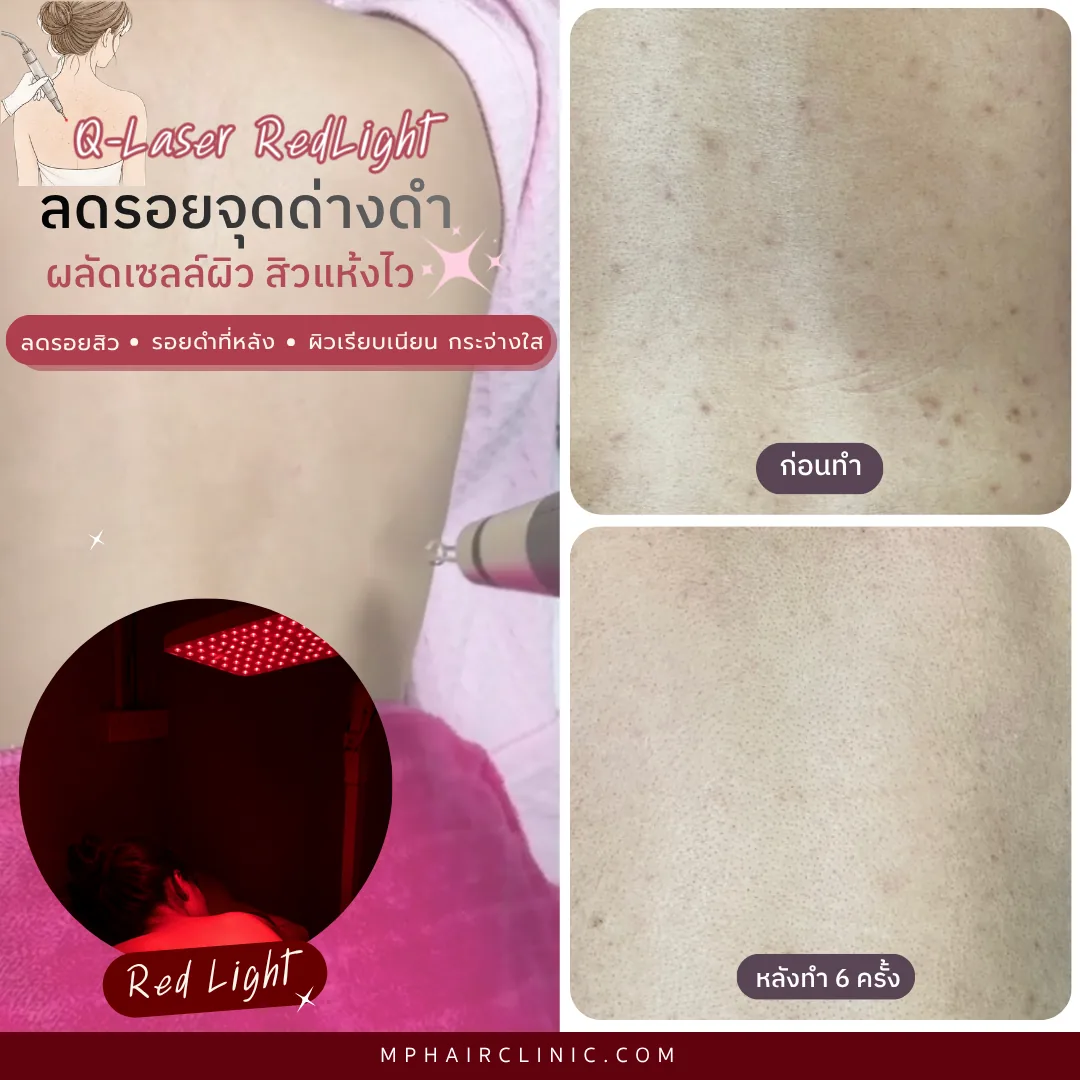
Reviews: Q-Switch Laser with RLT Light for Back Acne Marks, Dark Marks and Red Marks